
Do Pomeranians get cold in winter? Sweaters, coats, and when to use them
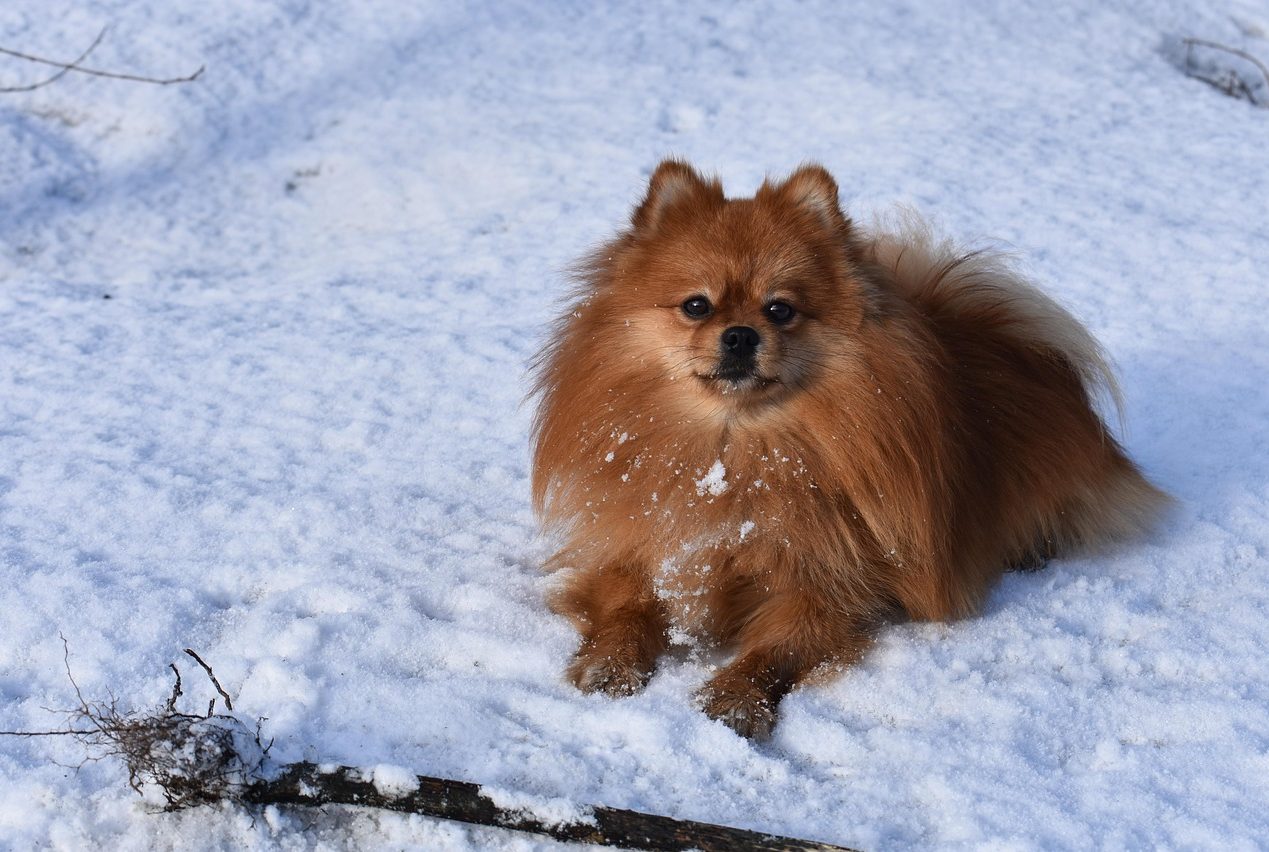
With its arctic-fox fur, you'd imagine a Pomeranian comfortable in any weather. That's partly true: its double coat is an excellent insulator. But it weighs two kilos (4.5 lb), walks ten centimetres (4 in) above an icy pavement, and some Poms shiver at the first cold snap. So, sweater or no sweater?
In short
A healthy adult Pomeranian usually doesn't need a jumper in dry cold: his double coat insulates well, as long as it's clean, dry and tangle-free. He can get cold in wet, windy weather, or if he's a puppy, elderly, thin, ill or shaved. If he shivers, lifts his paws or refuses to walk on, head home. Above all, protect his paws from road salt and dry him right down to the skin when you get back.
What its double coat does
A Pom has two layers: a long, straight outer coat, and underneath, a dense, woolly undercoat. The air trapped in the undercoat keeps warmth against the skin. In autumn, it even swaps its summer undercoat for a thicker winter one. See Pomeranian shedding.
This coat only works well when it's clean, dry and tangle-free. A matted or soaked undercoat no longer traps air, and barely insulates at all.
Why it can still feel the cold
- Its size: a small body loses heat much faster than a large one.
- Its belly close to the ground: on snow or a wet pavement, the least covered area is the most exposed.
- Damp: cold rain and wind chill it far more than dry cold.
- Its condition: puppies and older, thin or sick dogs cope less well with cold.
- A coat that isn't doing its job: a puppy in the middle of its coat change, or a shaved Pom, has lost its protection. See why you shouldn't shave a Pomeranian.
Signs it's cold
- It shivers, curls into a ball, looks for your arms.
- It lifts its paws one after the other, or refuses to walk on.
- It slows down and pulls to go home.
Head home as soon as you see these signs. A very cold dog that is weak, breathing slowly or not responding normally should be warmed gently and seen by a vet urgently.
Sweater or coat: when it helps
For a healthy adult Pom with a full coat, in dry cold and on a normal walk, clothing is generally not necessary. It becomes useful:
- for a puppy, especially during its coat change;
- for an older, thin or sick dog;
- in cold, damp weather, with wind or rain;
- for a dog that shivers outside, quite simply.
Choosing well
- Good coverage: protecting the back and belly, with a collar that comes up a little.
- Easy to put on, without forcing its legs.
- Fitted but not tight, measured under the coat like a harness, with an opening for the lead. See how to measure a Pom.
- Soft inside, with no seams rubbing under the armpits.
The downside of sweaters
Clothing worn for a long time flattens the coat and creates knots where it rubs, especially under the front legs. Take it off indoors, and give those areas a quick brush after the walk.
Paws, the real weak spot
- De-icing salt irritates the pads, and the dog then licks it off. Rinse and dry its paws and belly when you get home.
- Snowballs stick to the hair between the pads. Trim that hair level with the pads, using round-tipped scissors.
- A paw balm, applied before going out, helps prevent cracking.
- Antifreeze has a sweet taste that attracts dogs, and it's highly toxic. Watch out for puddles in car parks and garages.
Drying it properly afterwards
A wet Pom isn't dry just because the top of its coat is. Blot with a towel, pressing rather than rubbing, then check with your fingers that the undercoat is dry right down to the skin. If you use a hairdryer, set it to lukewarm, never hot, and hold it at a distance.
At home
A bed out of draughts, slightly raised if the floor is cold, with a blanket it can burrow into. Keep it away from radiators and stoves: it loves warmth, but sometimes gets too close.
Frequently asked questions
At what temperature should I worry?
There's no single number: damp, wind, how long you're out and the dog's condition matter as much as the thermometer. Watch your dog: it will tell you.
Should walks be shorter in winter?
In very cold weather or rain, several short outings are better than one long one. Make up for it with games at home.
Can I bathe it in winter?
Yes, as long as you dry it completely, down to the skin, before it goes out again. An undercoat left damp chills it, and encourages knots.
Are dog boots useful?
They protect well against salt and snow, but many dogs dislike them at first. Get it used to them at home, a few minutes at a time, with rewards.
Sources: ASPCA, Cold Weather Safety Tips; American Veterinary Medical Association, Cold weather animal safety. This article is for information and does not replace your vet's advice.