
Pomeranian teeth: tartar, brushing, baby teeth
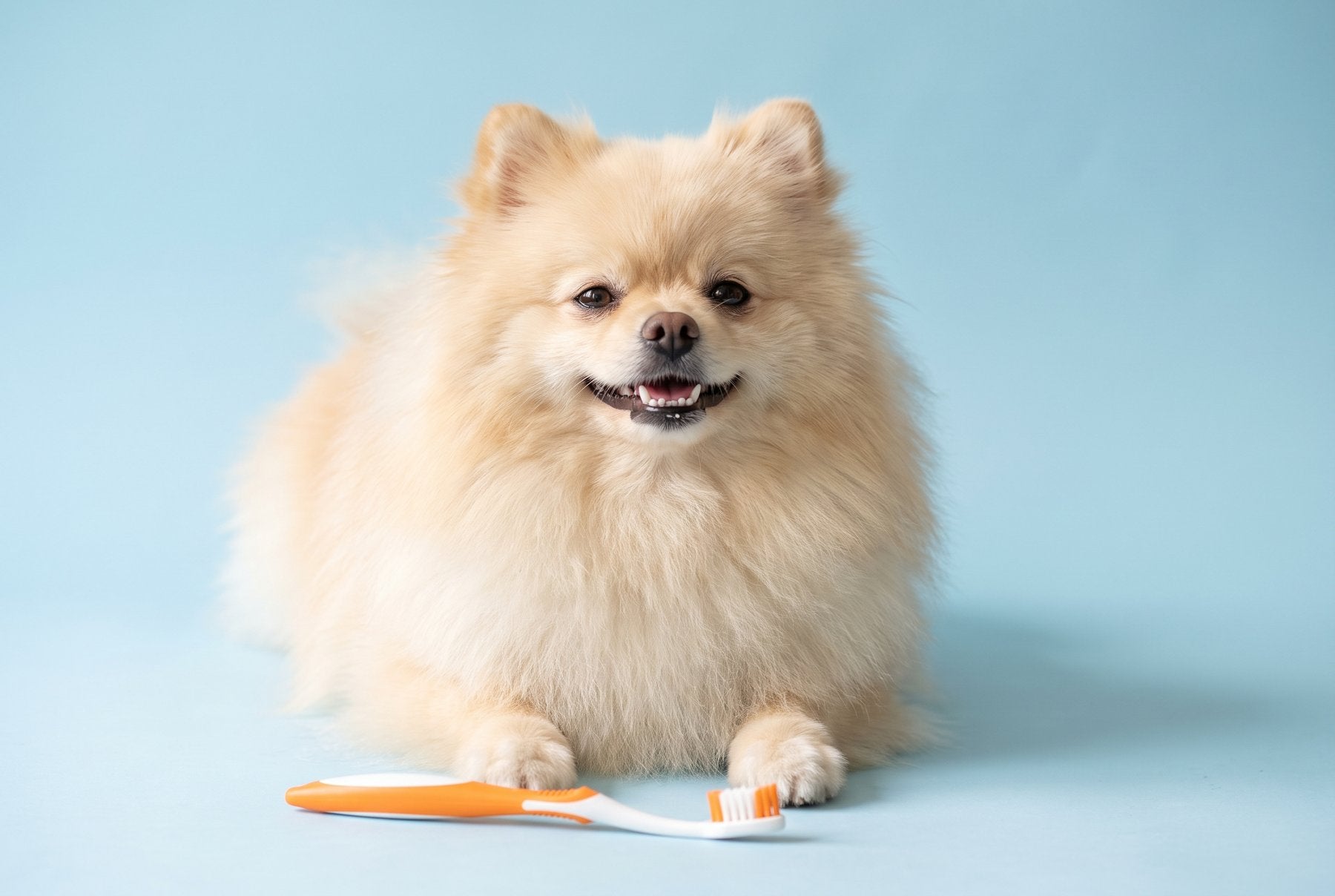
Strong breath, a yellow line along the gum, little teeth that overlap: in Pomeranians, the mouth is a weak spot. The good news is that most problems can be prevented, with two minutes a day.
This article is for information. Pain, a loose tooth or very bad breath should be checked by a vet.
In short
A Pomeranian has 42 teeth in a tiny jaw: plaque builds up easily and hardens into tartar within days. Bad breath, yellow tartar or red gums are the signs to watch for. The habit that matters most is daily brushing, with a dog toothbrush and dog toothpaste. Scaling is done at the vet's, and so is checking a baby tooth that hasn't fallen out by 6 or 7 months.
Why small dogs are more affected
Dental disease is one of the most common health problems in dogs: according to VCA Animal Hospitals, over 80% of dogs over the age of three have active dental disease. Small breeds are on the front line. A Pom has as many teeth as a big dog, 42 as an adult, in a tiny jaw. They're crowded, sometimes misaligned, and plaque settles in easily.
From plaque to periodontal disease
- Plaque: a film of bacteria builds up on the teeth within hours. It's soft, and brushing removes it.
- Tartar: within days, plaque hardens. Tartar no longer comes off with a brush.
- Gingivitis: the gum turns red, swells, may bleed. At this stage it's still reversible.
- Periodontitis: the infection goes below the gumline and attacks what holds the tooth in place. Teeth loosen, pain sets in, and bacteria can enter the bloodstream.
Signs to watch for
- Persistent bad breath (it isn't "normal for a dog").
- Yellow or brown tartar, especially on the canines and back teeth.
- Red or bleeding gums.
- It chews on one side only, drops its kibble, or refuses hard treats.
- It rubs its muzzle, drools, or no longer lets you touch its mouth.
Dogs are very good at hiding dental pain. Many keep eating normally with damaged teeth.
Baby teeth that don't fall out
Between roughly 3 and 7 months, puppies lose their baby teeth. In toy breeds, a baby tooth sometimes stays in place while the adult tooth grows next to it, most often a canine. Two teeth in one space is a plaque trap, and a risk of misalignment. If you see a double row at around 6 or 7 months, show your vet: they can remove the baby tooth, often during neutering.
Brushing: the step that matters most
Vets agree: daily brushing is the most effective way to keep teeth healthy. Once every three days is already less effective, because plaque has time to harden.
What you need
- A small dog toothbrush with a tiny head, or a silicone finger brush to start with.
- Dog toothpaste. Never human toothpaste: it isn't meant to be swallowed, and some contain xylitol, which is toxic to dogs.
Getting it used to brushing in two weeks
- Days 1 to 3: let it lick a little toothpaste off your finger. It's a treat, nothing more.
- Days 4 to 7: lift its lip for a few seconds and rub one or two teeth with your finger, then reward.
- Second week: move on to the brush, starting with the canines and the big back teeth, on the cheek side.
- After that: aim for 30 seconds to a minute, in small circles, with the brush angled towards the gum. No need to open its mouth wide: the outer surface of the teeth matters most.
Always stop before it gets fed up. A short, successful session is better than a long one that ends in a struggle. The same principles apply to brushing its coat.
What about "dental" treats?
Some help reduce plaque or tartar, but they don't replace the brush. To find your way, the Veterinary Oral Health Council (VOHC) awards a seal to products with proven effectiveness. Avoid bones, antlers and anything very hard: on small teeth, they can cause fractures. A simple rule from VCA: a chew should bend and give slightly when you press it.
Scaling at the vet
Once tartar has set in, only a professional cleaning removes it. In dogs, it's done under general anaesthetic: it's the only way to clean below the gumline, take X-rays and check every tooth. Daily brushing then lets you space these procedures out.
Frequently asked questions
At what age should I start brushing?
As soon as the puppy arrives, to get it used to it. While its teeth are changing, the mouth can be sensitive: be very gentle.
Is anaesthesia-free dental cleaning a good idea?
Vets advise against it: it only cleans the visible part of the teeth, without treating below the gumline, where the disease progresses.
Does kibble clean teeth?
A little, for some formulas designed for it, but not enough to skip brushing, especially in a small breed.
My Pom has very bad breath. Is it always the teeth?
Most often, yes. But abnormal breath can also signal another health problem. Either way, a vet check is needed.
Sources: VCA Animal Hospitals, Dental Disease in Dogs; American Veterinary Medical Association, Pet dental care; Veterinary Oral Health Council. This article is for information and does not replace your vet's advice.