
How much should a Pomeranian eat? Portions by weight
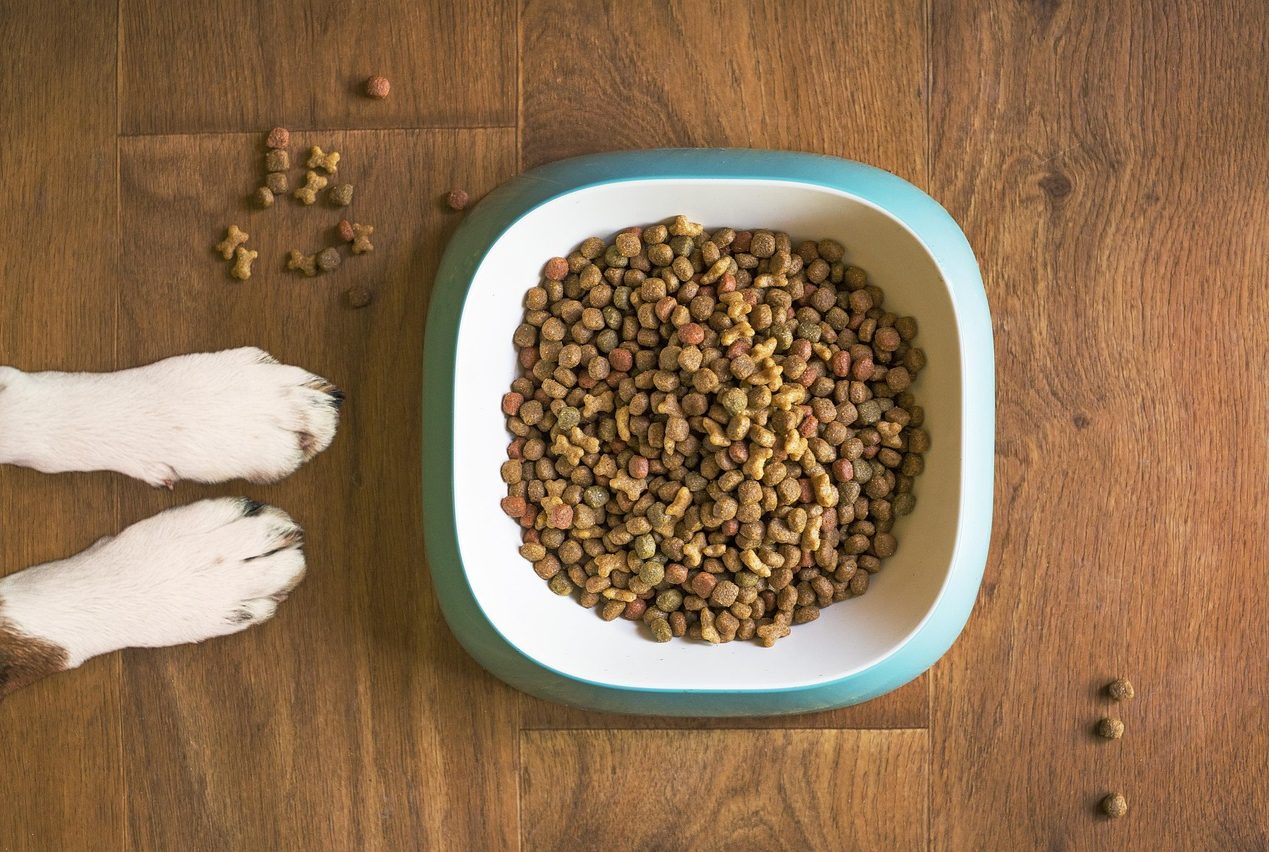
Two and a half kilos (5.5 lb), a bowl the size of a saucer: with a Pomeranian, every piece of kibble counts. Three extra grams of kibble a day, around ten kilocalories, and it can put on several hundred grams in a year: more than 10% of its body weight. Here's how to work out its portion, and find it on your bag of food.
This article gives rough figures. Your vet can calculate your dog's exact portion and tell you its ideal weight.
Start from its ideal weight, not its current weight
The portion is calculated for the weight your dog should be. If your Pom weighs 3.2 kg (7 lb) but its ideal weight is 2.8 kg (6.2 lb), use 2.8 kg. On such a fluffy dog, the coat fools the eye: a Pom can look slim and be overweight.
The rib test
Lay your hands flat on its sides, pressing lightly through the coat:
- you can feel the ribs easily, under a thin layer: it's at a good weight;
- you have to press to find them: it's probably carrying a few extra grams;
- you can feel each rib sticking out, with no covering at all: it may be too thin.
Seen from above, when the coat is wet or at bath time, you should also be able to make out a waist, just behind the ribs.
How many calories a day?
Vets start from the resting energy requirement, calculated from body weight, then multiply it according to lifestyle. For a neutered, moderately active adult, you get roughly this:
| Ideal weight | Energy per day (rough figure) | Kibble at 380 kcal per 100 g |
|---|---|---|
| 1.5 kg | 130 to 150 kcal | 35 to 40 g |
| 2 kg | 165 to 190 kcal | 43 to 50 g |
| 2.5 kg | 195 to 225 kcal | 51 to 59 g |
| 3 kg | 225 to 255 kcal | 59 to 67 g |
| 3.5 kg | 250 to 290 kcal | 66 to 76 g |
Conversions: 1 kg = 2.2 lb, so 1.5 kg ≈ 3.3 lb, 2 kg ≈ 4.4 lb, 2.5 kg ≈ 5.5 lb, 3 kg ≈ 6.6 lb and 3.5 kg ≈ 7.7 lb. 10 g ≈ 0.35 oz: for portions this small, a kitchen scale set to grams is the most accurate option.
These figures are a starting point. A very active or unneutered dog may need more. An older, very calm dog, or one that needs to lose weight, less. Needs vary a lot from one dog to another, even at the same weight.
Reading the bag
The feeding guide printed on the bag is designed for that specific food. Two habits:
- Find the energy content of the food, in kcal per 100 g or per kg. Kibble ranges from about 330 to over 420 kcal per 100 g: for the same weight, the difference is huge.
- Start at the low end of the range given for your dog's ideal weight, then adjust.
Weigh, don't scoop
For a dog that eats 50 g a day, a slightly overfilled scoop easily adds 10 g, which is 20% of the portion. Kitchen scales settle the question. Weigh out the day's portion in the morning, and take training rewards from it.
How many meals?
For an adult, two meals a day work well. Puppies eat more often: three to four small meals until about four months, following the breeder's and vet's advice. In very small breeds, skipping meals exposes a puppy to low blood sugar. See getting ready for a Pom puppy.
Treats, the hidden portion
Veterinary guidelines are simple: treats shouldn't make up more than 10% of the day's calories. For a 2.5 kg (5.5 lb) Pom, that's about twenty kilocalories. A single biscuit made for a medium-sized dog can be enough to go over.
- Cut treats into tiny pieces: for a dog, it's the gesture that counts, not the size.
- Use part of its kibble as rewards during training.
- Let it search for its meal in a snuffle mat: it eats more slowly, and it's kept busy.
Why extra weight really matters for Poms
A few hundred extra grams weigh on its weak spots: the knees, and the windpipe, whose symptoms get clearly worse with extra weight. See luxating patella and tracheal collapse.
Frequently asked questions
Dry food or wet food?
Both can work, as long as the food is "complete" and suited to its age. Wet food contains a lot of water: for the same weight, it provides much less energy. If you mix the two, reduce the kibble accordingly.
My Pom always leaves a little in its bowl. Is that a problem?
Not necessarily. If it keeps a good weight and plenty of energy, it may simply be eating to its appetite. A sudden loss of appetite, on the other hand, is worth a vet's opinion.
Can I give it a bit of our meal?
Best avoided. Table scraps are often fatty or salty, and some common foods are toxic to dogs, such as chocolate, grapes, onion, garlic or the xylitol in chewing gum.
How do I help it lose weight?
Have it weighed at the vet's, set a target weight together, and gradually reduce the portion and treats. Slow weight loss, around 1 to 2% of body weight per week, is safer.
Sources: WSAVA, Global Nutrition Guidelines; ASPCA, People Foods to Avoid Feeding Your Pets. This article is for information and does not replace your vet's advice.